
How to Evaluate a Property Before You Buy
A guide to assessing a property before you commit: market value, comparable sales, risk checks, and how to weigh the decision to buy or walk away.
What to Cover
How It Works
The steps in order, and what happens at each one.
Gather Property Details
You collect the property address, listing details, contract of sale and any available inspection reports.
Research the Market
You research comparable sales, suburb data and property specifics, or engage a licensed buyer's agent to do this.
Inspect and Check Risks
You inspect the property or review available inspection reports, and check title, zoning and strata documents.
Form a View
You compare your findings against the asking price and decide whether to pursue, negotiate or walk away.
How to Evaluate a Property Before You Buy
Found a property but unsure whether it is the right choice? This guide walks through the steps to assess a property independently before you commit. For help with price negotiations, read the guide to appraisal and negotiation.
Why Independent Assessment Matters
Selling agents have one job: get the best price for their vendor. Everything they tell you is filtered through that lens. You need your own objective view before you commit.
Your evaluation should give you:
- A realistic market value based on comparable sales, not the agent’s price guide
- Risk identification that the sales process may not surface
- A clear decision on whether to pursue or walk away
In WA a buyer’s agent must be licensed as a real estate agent or registered sales representative (Consumer Protection WA). If you plan to engage one, check their licence with the Consumer Protection licence search first.
What to Cover
Market Assessment Look at recent comparable sales in the area and adjust for differences in:
- Property size and configuration
- Condition and presentation
- Location within the suburb
- Land size and zoning
- Recent market movements
This gives you a realistic picture of market value rather than an optimistic listing estimate.
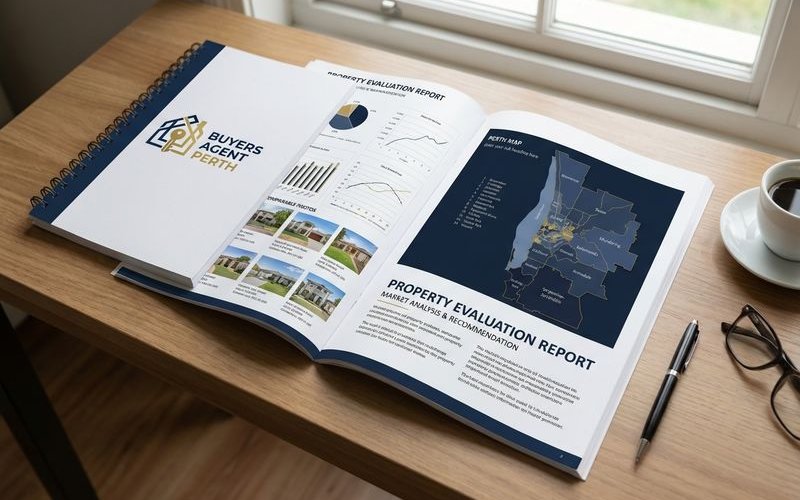
Suburb Analysis Place the property in its suburb context by reviewing:
- Historical price trends
- Current market conditions
- Growth drivers and risks
- Infrastructure and amenity changes
- Comparable suburb benchmarks
Risk Identification Check factors that could affect your decision:
- Structural concerns observed during inspection
- Legal issues such as easements, covenants and zoning
- Market risks such as oversupply or infrastructure changes
- Future development impact
- Strata considerations if buying a unit
Investment Analysis (For Investment Properties) If you are buying to invest, work through:
- Rental yield estimates based on market rents
- Capital growth prospects
- Tenant demand in the area
- Cash flow at different interest rates
If you are building a portfolio, the guide to investment property covers strategy and acquisition.
Reaching a Decision A completed evaluation should leave you in one of three positions:
- Buy: good value at the asking price
- Buy with conditions: worth pursuing but negotiate on price or conditions
- Don’t buy: the issues outweigh the benefits at this price
Who This Evaluation Suits
This process is useful for:
- Buyers making final decisions who want to validate their own research
- Interstate buyers who cannot easily inspect Perth properties (see the guide for interstate buyers)
- Investors wanting data-driven analysis before committing
- First-home buyers uncertain about market value
- Anyone under time pressure who needs to assess a property quickly
Working Through the Assessment
Collect the listing details, contract and any inspection reports, then research comparable sales and suburb data. Inspect the property or review the reports carefully, check the title, zoning and strata records, and compare your findings against the asking price. Done thoroughly, this gives you a defensible basis for your decision.
Next Steps
Don’t make a six-figure decision based on a sales pitch. For a view of the whole buying journey, read the guide to complete buying. You can also explore the other guides on this site for more detail on each stage, from research through to settlement.
Buyers Agent Perth publishes property guides. It is not a licensed real estate agency and does not act for property buyers or sellers.
Frequently Asked Questions
How is a buyer's evaluation different from a bank valuation? expand_more
Should I get building and pest inspections? expand_more
What legal checks should I do? expand_more
Do I need a licensed buyer's agent to evaluate a property? expand_more
Related Guides
How to Appraise and Negotiate a Property You've Found
A guide for buyers who have already identified a property: how to assess market value, run due diligence, and negotiate with the selling agent.
Guide to the End-to-End Property Buying Process
A practical guide to the full property buying process in Perth, from setting a buyer brief and choosing suburbs, through inspections, due diligence, negotiation and settlement.
Researching a Perth purchase?
Start with the suburb guides and buying guides, and get licensed advice before you sign anything.