
Scarborough Property Investor Report
Why this suburb, why now, and what could go wrong: prices vs Perth, yields, vacancy, the supply pipeline, demographics, infrastructure and a clear strategy verdict for Scarborough (6019).
Data compiled 2026. Every figure is attributed to a named source below.
The short version
Scarborough is the most accessible and most liquid of Perth's premium beach suburbs, and the one where the numbers actually work for an income investor. Houses sit near $1.45 million and units near $780,000, well below the western-suburbs prestige set, and both sell fast: houses average under two weeks on market. It is a young, renter-heavy, high-turnover suburb built around a beach that has just had a $100 million makeover.
That makes it a genuine yield-and-growth play, with unit yields around 4.5% gross and a tenant pool that keeps vacancy near 0.5%. The trade-off is supply: Scarborough has the heaviest apartment pipeline of any suburb in this batch, with multiple towers approved along the beachfront, so stock selection matters more here than anywhere.
The full report below covers price trends versus Perth, rents and yields, the vacancy and supply picture, who lives here, the infrastructure driving demand, the real risks, and our plain-English verdict on who Scarborough actually suits. Enter your email to read it in full.
Read the full Scarborough report
Price trends vs Perth, yields, vacancy, the supply pipeline, demographics, infrastructure, risk and our strategy verdict, with every figure sourced. Enter your email to unlock it instantly.
1. Suburb snapshot
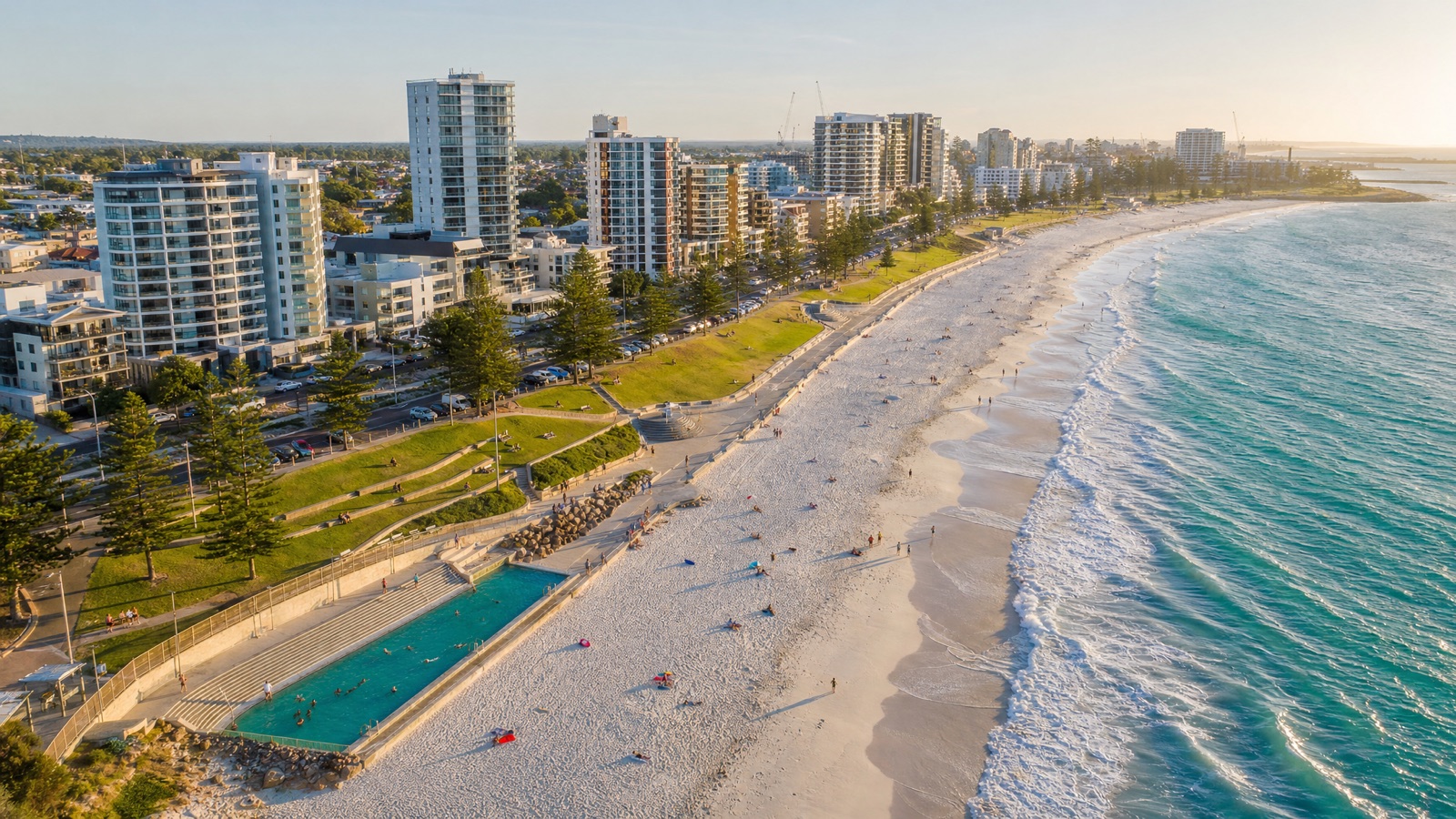
Scarborough sits about 14km north-west of the Perth CBD on the Indian Ocean, anchored by one of the city's most recognisable beaches and a recently rebuilt foreshore. Unlike the tightly held western-suburbs prestige pockets, it is a large, young, high-density and high-turnover suburb with a deep apartment market and a big tenant base. For investors that means the opposite trade-off to a blue-chip suburb: lower entry prices, real liquidity and genuine yields, set against an active development pipeline. The thesis here is lifestyle-led income and growth, with stock selection doing most of the work.
2. Sales and price trends
The Scarborough median house price sits around $1.45 million, with units near $783,000, the latter up about 6.3% over the year (property.com.au). On a five-year view the suburb has compounded at about 11.8% a year for houses and 6.3% a year for units (property.com.au), so the house market has clearly led, with land near the beach the scarcer asset.
For context, Perth's median house price rose roughly 18% over the past year to about $1.09 million (Domain via ABC News). Scarborough houses trade above the Perth median but well below the western-suburbs prestige belt, which is exactly what makes the suburb accessible to a wider pool of buyers and underpins its liquidity.
Houses have compounded at nearly double the unit rate, a sign the scarce asset here is land near the beach.

"Scarborough is where I send investors who want the beach without western-suburbs prices and actually care about the rent return. It trades and rents quickly, so you're not waiting months to buy or to lease. But it's an apartment town with real supply, so the building matters more than the suburb. I'd rather a well-built older apartment one street back with a car bay than a brand-new unit that competes with the next tower's launch."
3. Rental market and yield
Houses rent for around $998 a week at a gross yield near 3.5% (property.com.au), already healthier than the sub-2.5% house yields common in the prestige belt, because the entry price is so much lower.
Units are the income standout: about $750 a week at a gross yield near 4.5% (property.com.au). For an income-focused investor, a sub-$800,000 apartment a short walk from a major beach, returning 4.5% gross into a near-zero vacancy market, is about as close as premium coastal Perth gets to a cash-flow-friendly buy.
Both segments yield better than the prestige belt, with units the standout off a sub-$800K entry price.
4. Supply and demand indicators
Demand is strong and fast-moving. Scarborough's vacancy rate sits near 0.5% (PropRadar), well inside the 2.5% to 3.5% balanced range, and stock turns over quickly: roughly 250 houses and 320 units sold over the past year, with houses averaging about 12 days on market and units about 10 days (Your Investment Property). That liquidity is a genuine advantage: you can buy and lease here far faster than in a tightly held prestige suburb.
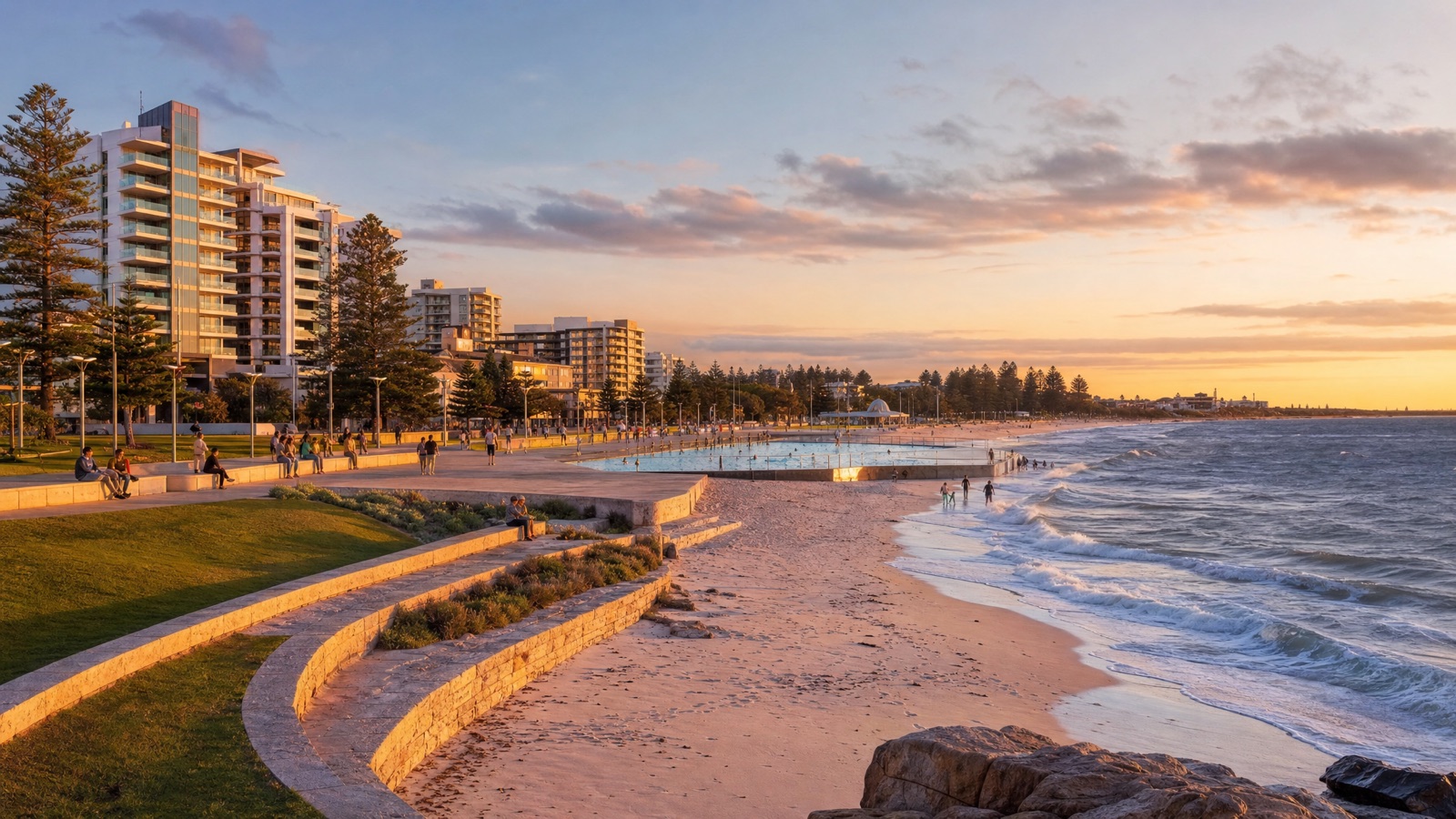
Supply is the defining risk, and it is significant. The $100 million Scarborough Beach foreshore redevelopment, including the beach pool, skate park and esplanade upgrades, has reset the amenity of the whole strip (OpenAgent). On top of that, DevelopmentWA approved a 17-storey apartment development at 291 West Coast Highway (DevelopmentWA), the WAPC approved an 18-storey hotel-and-apartment project under the significant-development pathway in December 2024 (WAPC), and beachfront projects such as The Dunes are under construction (The Dunes). This pipeline lifts amenity but adds apartment stock, so unit buyers must underwrite absorption and choose position and quality carefully.
"The beach redevelopment is the part people underrate. Scarborough used to feel a bit tired; now the foreshore, the pool and the esplanade have turned it into a destination, and that kind of amenity uplift doesn't get reversed. The flip side is the towers. There's a lot of apartment supply coming on the strip, so if you buy a generic new unit you're competing with every other launch. Buy the position and the floor plan that the next building can't replicate, or step back from the beach and buy land."
5. Demographics and affordability
Scarborough is young, large and renter-heavy, the demographic engine behind its rental market. The 2021 Census recorded a population of about 17,605, a median age of just 36 (the youngest in this batch), and a median household income near $2,107 a week (ABS 2021 Census). Only about 58% of households are families, and a high 39.4% rent, the highest renter share of the five coastal suburbs we cover, with just 23.6% of homes owned outright. That large, mobile tenant pool is what keeps vacancy near 0.5% and rents rising.
6. Infrastructure and growth drivers
The demand investors are buying into comes from Scarborough's beach, amenity and access:
- CBD access. Scarborough is roughly 14km and about a 25 to 30 minute drive from the Perth CBD via the freeway; there is no station in the suburb, with bus connections to Stirling and Glendalough on the Joondalup line, a short rail run from the city (REIWA).
- The rebuilt beachfront. The $100 million foreshore redevelopment, with its beach pool, esplanade and event spaces, has turned the beach into a year-round destination and lifted the amenity of the entire suburb (OpenAgent).
- Scarborough Beach Road corridor. The arterial linking the beach to the city carries retail, dining and transit, and has been progressively upgraded.
- Retail and services. The redeveloped Karrinyup shopping centre and the Innaloo and Stirling retail and commercial hubs are all a short drive, deepening the suburb's everyday amenity.
- Lifestyle brand. The surf, the esplanade and the entertainment precinct give Scarborough a recognisable lifestyle identity that supports both owner-occupier and rental demand.
7. Risk assessment and strategy fit
- Apartment supply risk. This is the headline issue: multiple towers are approved or under construction, so new unit stock can weigh on rents and values during absorption. Position and quality are everything.
- Generic-unit dilution. A plain new apartment competes directly with every other launch; older, well-built stock with parking and a genuine aspect tends to hold better.
- Higher density, more variability. A large, mixed suburb means quality varies street to street; the suburb-wide median can mislead on any specific block.
- Cyclical lifestyle demand. Some of the tenant pool is mobile and lifestyle-driven, so demand can soften faster in a downturn than in an owner-occupier suburb.
- Buy after a strong run. Houses have compounded near 12% a year for five years, so entry discipline still matters even at accessible prices.
Strategy fit. Scarborough suits an income-focused investor who wants a well-chosen unit with position and parking for yield plus a tight rental market, or a growth buyer chasing scarce land near the beach. It is less suited to a buyer who wants a generic off-the-plan apartment and expects it to outperform while the beachfront pipeline is absorbed.
8. The investor verdict
Put the pieces together and Scarborough is the income-and-liquidity option of the coastal set: accessible prices, fast sales and leasing, yields above the prestige belt, near-zero vacancy and a beachfront that has just been rebuilt, set against the heaviest apartment supply pipeline of any suburb we cover. The structural amenity win from the foreshore is real and durable; the supply risk is just as real and concentrated in new units. Buy the position and quality the towers cannot replicate, or step back and buy land near the beach, and let comparable-sales evidence and negotiation, not the asking price, decide what you pay.
Sources
- property.com.au, Scarborough 6019
- REIWA, Scarborough suburb profile
- Your Investment Property, Scarborough 6019
- PropRadar, Scarborough vacancy rate
- Domain via ABC News, Perth median house price
- ABS 2021 Census, Scarborough
- OpenAgent, Scarborough beach redevelopment
- DevelopmentWA, 291 West Coast Highway approval
- WAPC, significant development applications
- The Dunes Scarborough, construction update
Thinking about buying in Scarborough?
Numbers like these only get you so far. We can pull live comparable sales, pressure-test a specific property against this data, and negotiate on your behalf in Scarborough.