
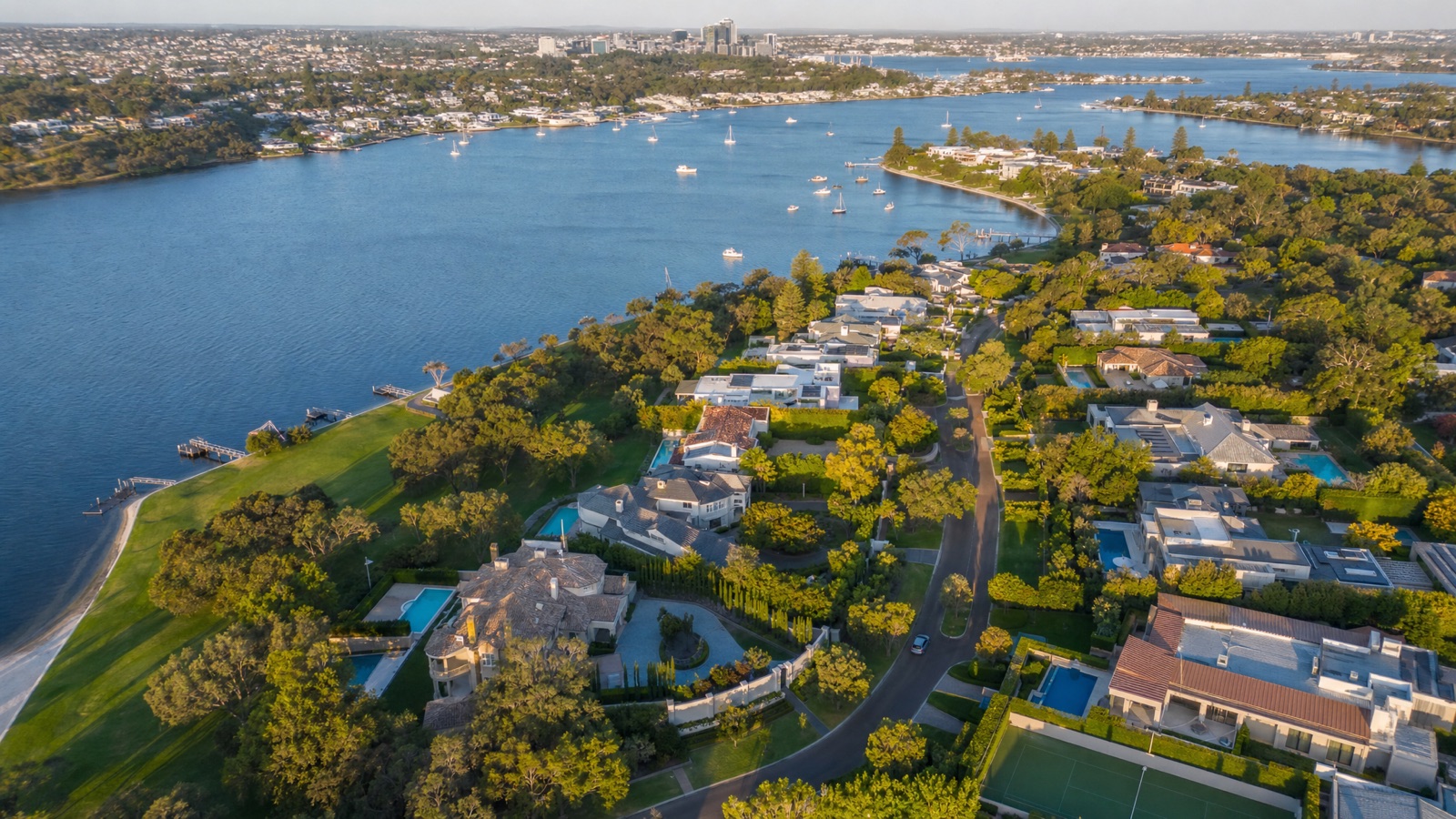
Dalkeith Property Investor Report
Why this suburb, why now, and what could go wrong: prices vs Perth, yields, vacancy, the supply pipeline, demographics, infrastructure and a clear strategy verdict for Dalkeith (6009).
Data compiled 2026. Every figure is attributed to a named source below.
The short version
Dalkeith is Perth's premier riverfront address, and a textbook capital-preservation hold rather than an income play. Houses trade around $4.3 million, the highest median of the western-suburbs belt after Peppermint Grove, on a peninsula wrapped by the Swan River. This is a suburb of large homes, deep gardens and settled, high-net-worth owners who rarely sell: only around 60 houses change hands in a year.
The numbers reflect that. Yields sit near 2%, among the lowest in Perth, there is effectively no apartment market, and barely one in six homes is rented. You do not buy Dalkeith for cash flow; you buy it for scarce riverfront land, a blue-chip postcode and long-run capital growth, and you hold it for a very long time.
The full report below covers price trends versus Perth, rents and yields, the vacancy and supply picture, who lives here, the infrastructure driving demand, the real risks, and our plain-English verdict on who Dalkeith actually suits. Enter your details to read it in full.
Read the full Dalkeith report
Price trends vs Perth, yields, vacancy, the supply pipeline, demographics, infrastructure, risk and our strategy verdict, with every figure sourced. Enter your details to unlock it instantly.
1. Suburb snapshot
Dalkeith occupies a peninsula about 6km west of the Perth CBD, bounded by the Swan River on three sides and beside the University of Western Australia. It is the most expensive established suburb in the western-suburbs belt after Peppermint Grove, defined by large riverfront and near-river homes, lush mature gardens and a settled, high-net-worth, owner-occupier population. For investors that means a very specific profile: deep scarcity, the lowest yields in Perth, almost no apartment stock and very thin liquidity. The thesis here is land, prestige and long-run capital preservation, full stop.
2. Sales and price trends
The Dalkeith median house price sits between about $4.1 million and $4.4 million depending on the source: REIWA reports around $4.1 million with 17.1% growth (REIWA), while property.com.au and realestate.com.au show about $4.41 million, up roughly 24% on the year (property.com.au). With only around 60 sales a year, a handful of large transactions move the median, so treat it as a band rather than a precise number. There is effectively no published unit median, because Dalkeith is a house suburb.
For context, Perth's median house price rose roughly 18% over the past year to about $1.09 million (Domain via ABC News). Dalkeith's house median is roughly four times that, and the suburb broadly kept pace with the wider market over the year, which is notable for an asset class this expensive and this thinly traded.
Growth figures swing with just a few sales a year, so read them as a broad signal, not a precise trend.

"Dalkeith is the suburb where the median tells you almost nothing. When sixty houses sell in a year and they range from a knock-down on a good block to a brand-new riverfront trophy home, the average is meaningless on any single deal. What you're really buying is the position: river frontage, river views, or a short walk to the water, in that order. I tell clients to forget the suburb number and value the specific block, because in Dalkeith the land and the outlook are the entire asset."
3. Rental market and yield
Houses rent for roughly $1,225 to $1,300 a week (REIWA; RealEstateInvestar), which against a median above $4 million is a gross yield of only about 2.0%, among the lowest in Perth (RealEstateInvestar). The rent does not come close to covering the cost of holding a property here, so a Dalkeith purchase only makes sense if capital growth and land value do the work over a long hold.
There is no meaningful unit market to offer a higher-yielding alternative. Like the most tightly held coastal suburbs, Dalkeith simply does not give income investors an apartment entry point: you accept a very low yield in exchange for scarcity, prestige and riverfront land.
At about 2% gross, a Dalkeith house runs at a significant annual holding cost. This is a capital-preservation asset, not an income one.
4. Supply and demand indicators
The defining feature of Dalkeith is how little ever comes to market. Only around 56 to 66 houses sold in the past year (Your Investment Property; PropertyValue), and just 16% of homes are rented (ABS 2021 Census), so the rental pool is small. Vacancy estimates sit around 0.7% to 1.0% (RealEstateInvestar; PropRadar), and reported selling times vary widely with the small sample. Low listings and a tiny rental pool are the classic signature of a settled, owner-occupier stronghold.
On supply, there is very little happening within Dalkeith: it is almost entirely detached housing, the riverfront and the established streets are built out, and there is no apartment pipeline of note in the suburb itself. Higher-density development in the City of Nedlands is directed to the Stirling Highway corridor and the Nedlands and Claremont centres, not to Dalkeith's riverside streets. For an owner here, that protected scarcity is the core of the long-run land story.
"Scarcity in Dalkeith is structural, not cyclical. The riverfront is finite, the blocks are large and the owners tend to hold for decades, often passing homes down rather than selling. That's why you can wait a long time for the right property and then face serious competition when it appears. My advice to buyers here is to be patient, be ready, and be willing to move decisively, because the genuinely good riverfront and river-view positions come up only a handful of times a year."
5. Demographics and affordability
Dalkeith is the highest-income, most family-dominated and most owner-occupied suburb in this batch. The 2021 Census recorded a population of about 4,398, up roughly 3.7% on 2016, a median age of 45, and a median household income near $4,672 a week, the highest of the suburbs we cover (ABS 2021 Census). About 86% of households are families, just 16% rent, and a remarkable 55% own their home outright. This is a settled, high-equity community that rarely needs to sell, which is exactly why so little stock reaches the market.
6. Infrastructure and growth drivers
The demand investors are really buying into comes from Dalkeith's river position and its setting:
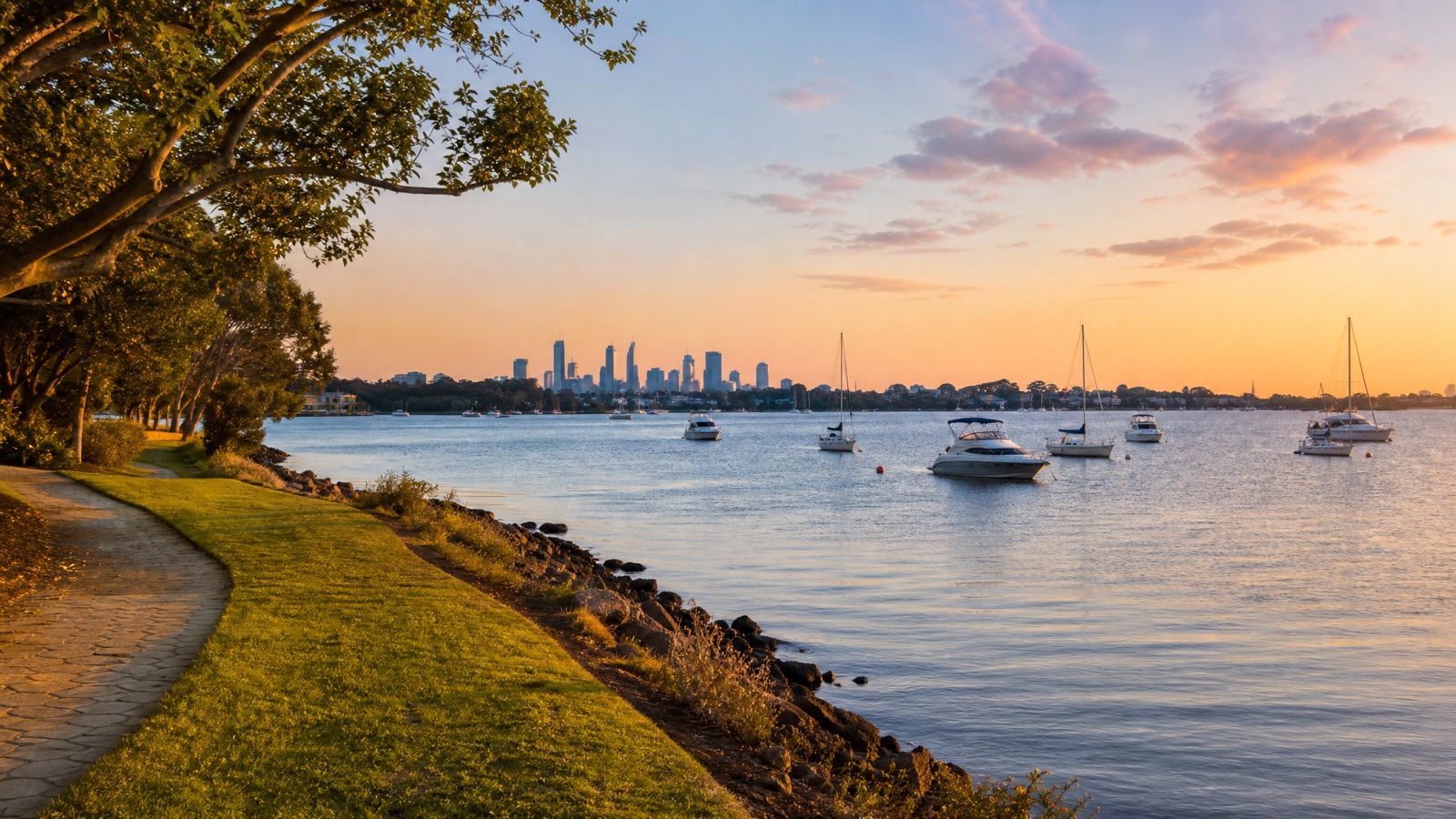
- Riverfront and Point Resolution. Dalkeith is wrapped by the Swan River on three sides, with the Point Resolution reserve and foreshore giving the suburb a scarce, built-out waterfront that cannot be added to, the core of the land story.
- CBD access. Dalkeith is only about 6km from the Perth CBD; there is no train station in the suburb, with direct bus routes (including services 23 and 24) providing the public-transport link.
- UWA and the QEII precinct. The University of Western Australia and the QEII medical centre are a short distance away, supporting both lifestyle demand and the prestige of the address.
- Schools. Dalkeith Primary serves the local catchment, and the suburb sits among the western-suburbs private schools (MLC, Christ Church Grammar, Scotch), a meaningful and durable driver of family demand.
- Protected character. Detached-housing zoning and built-out riverside streets keep Dalkeith low-density, reinforcing the scarcity that underpins values (see section 4).
7. Risk assessment and strategy fit
- Very low yield, high holding cost. House yields near 2% mean substantial out-of-pocket holding costs every year; this only works with deep equity, a long hold and capital growth.
- No income alternative. With effectively no unit market, there is no higher-yielding entry point; if you buy in Dalkeith, you accept the low house yield.
- Very thin liquidity. Around 60 sales a year makes both buying and selling slow and competitive, and a single asset of this size is large, illiquid and sensitive to lending policy, land tax and the prestige cycle.
- Noisy data. So few sales means published medians, growth rates and selling times all swing widely; valuing a specific property needs genuine local evidence, not portal averages.
- Capital intensity. Entry at $4 million-plus concentrates a large amount of capital in one illiquid asset, which suits only a specific kind of high-equity investor.
Strategy fit. Dalkeith suits a high-equity, low-gearing buyer who wants a scarce riverfront or near-river house for long-term capital preservation and growth, and who can hold through a very low-yield, low-liquidity market. It does not suit a geared, cash-flow-dependent investor, an income-focused buyer, or anyone needing liquidity.
8. The investor verdict
Put the pieces together and Dalkeith is the textbook capital-preservation hold: Perth's premier riverfront suburb, with the highest incomes, the most outright ownership and the deepest scarcity in the western-suburbs belt, set against the lowest yields in the city, no apartment market and very thin liquidity. It will not pay you income and it will not trade quickly; what it offers is scarce riverfront land and a blue-chip postcode that holds value across cycles. Buy here for the land, the river and the very long game, accept the low yield, be patient for the right position, and let comparable-sales evidence and negotiation, not the asking price, decide what you pay.
Sources
Thinking about buying in Dalkeith?
Numbers like these only get you so far. We can pull live comparable sales, pressure-test a specific property against this data, and negotiate on your behalf in Dalkeith.